
Are you working as a babysitter or planning to start? This guide covers the updated September 2026 rates in Argentina and advice to help you calculate how much to charge based on your experience and work schedule.
Are you just starting out as a nanny and not sure how much to charge? According to the latest official update, as of September 2026 the minimum hourly wage for nannies is $4,185.94 for live-out and $4,641.90 for live-in. This is the legal floor: in practice, the rate is usually higher depending on your experience, the tasks you do, and where you work.
In this guide, we’ll walk you through how to calculate your hourly rate as a nanny in Argentina and when it makes sense to ask for a raise.
How Much Does a Nanny Earn in Argentina, and What Does the Law Say?
According to the latest official update, the minimum hourly wage for nannies in Argentina in September 2026 is $4,185.94 for live-out and $4,641.90 for live-in. This is the legal floor: you can’t be paid less than that, and it’s a useful reference point for valuing your work properly.
From there, other factors affect your rate: the city where you work, your skills or experience, the age and number of children you look after, the schedule (day or night), and the arrangement you have with the family. Let’s look at what the law says about this.
Minimum Wage for Nannies
In Argentina, nanny work is regulated by a special law called the Régimen de Casas Particulares. This law was created in 2013 (Law 26.844) and protects the rights of people who work in homes, whether caring for children or doing domestic tasks.
According to the resolution in effect since September 2026, the minimum amounts are as follows:
| Category | Hourly Pay | Monthly Salary |
|---|---|---|
| Live-out nanny | $4,185.94 | $529,261.78 |
| Live-in nanny | $4,641.90 | $584,936.09 |
These amounts represent the legally required minimums. The upcoming increases are already confirmed: +1.7% in October, +1.6% in November, and +1.6% in December 2026. In addition to their salary, registered nannies are entitled to the benefits and protections set out under Argentine law, such as vacation time, medical coverage, and ART (workplace accident insurance).
Hourly Pay for Nannies in Argentina’s Major Cities
The minimum rates we covered above matter because they give you a reference point for what your work is worth. But the actual salary is always agreed between the family and the nanny, and it can vary for many reasons.
One of the most important factors is the city where you work. In areas like Neuquén, Río Negro, Chubut, and other Patagonian provinces, the law adds a 31% surcharge for unfavorable zones, so the minimum there is already higher than in the rest of the country. Outside these areas, market rates tend to sit above the legal floor, especially in Buenos Aires. If you’re caring for two young children or have a lot of experience, you can ask for more even in a city where the average is lower.
Calculating a Nanny’s Salary
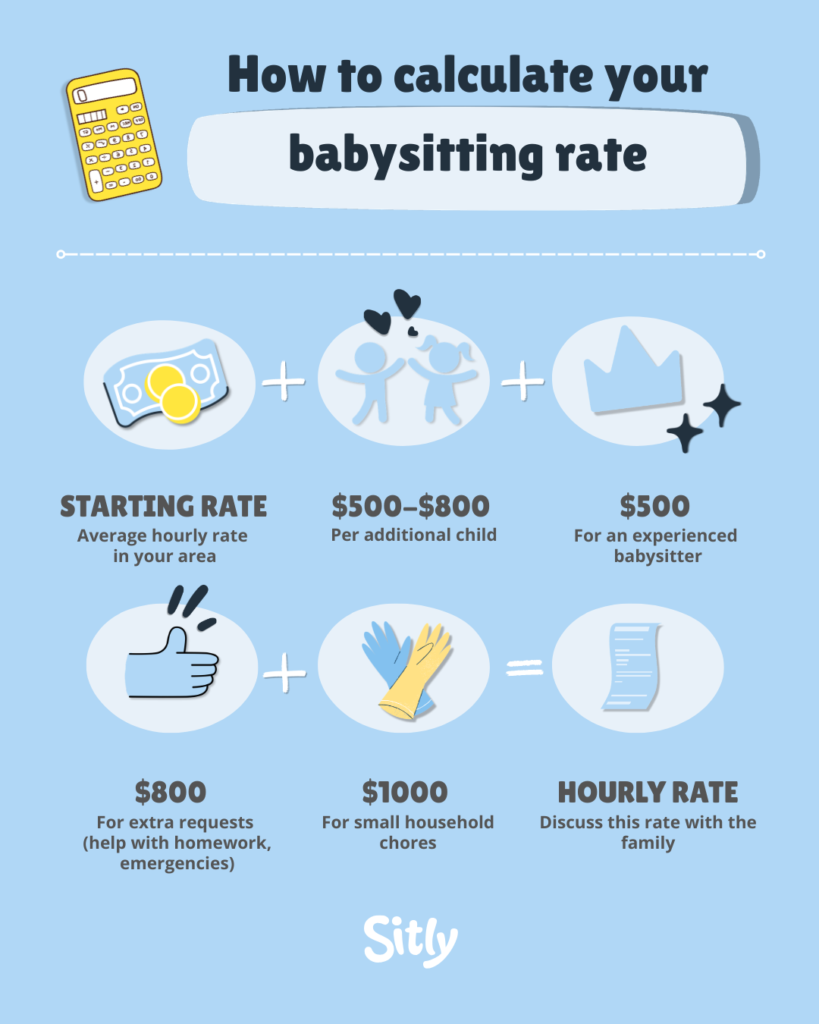
Beyond where you work, many other factors can help you earn more as a nanny: your experience, your training or qualifications, the number of children you care for, and any additional tasks you take on. All of these directly affect your hourly rate. The infographic below can help you realistically calculate your rate based on the type of work you do for each family.
Infographic: calculating a nanny’s salary
How Much Does an Experienced or Trained Nanny Earn?
If you’ve been working with children for several years or have specific training (for example, as a preschool assistant, childcare assistant, or first aid certification), you can charge more than the minimum. Families tend to value and pay better when they see professionalism, responsibility, and a good connection with the children.
How Much Does a Nanny Charge to Care for Two Children?
When you’re looking after two or more children, your hourly rate can go up by 10% to 20%. Caring for two young siblings takes more attention and energy than caring for one older child, and if they’re very different ages, planning activities for both can be even more challenging.
Hourly Rate With Light Household Chores
Tidying the children’s room, preparing their food, or washing the dishes they used are part of your normal tasks. But if the family asks you to do other household chores — hanging up everyone’s laundry, vacuuming, cleaning — that’s extra work and should be paid separately. An increase of $400 to $800 per hour is reasonable in these cases.
Nanny Rate If You Use Your Own Car
If you help with the children’s transportation (school, swimming, activities) using your own car, agree with the family on a weekly or monthly reimbursement for gas or transport. This way you make sure that expense is covered.
How Much Does a Nanny Earn at Night?
Night work is usually paid 10% to 20% more, since it involves less convenient hours or staying overnight. For example, with the current minimum rate of $4,185.94 per hour, at night you could ask for between $4,600 and $5,000.
That said, it depends on the type of work: if the children have already had dinner and go to bed right away, you can accept a slightly lower rate; if they’re babies or wake up often, it’s fair to ask for more.
Tip: always talk to the family about your safety getting home at night. Will someone accompany you? Will they pay for a taxi or a ride-share app? Your safety comes first, and it should be agreed on from the start.
Nanny Pay: Hourly or Fixed Amount?
It depends on the type of work. If it’s occasional or your schedule changes a lot, charging by the hour is fairer: you’re only paid for the time worked. If you work steadily with a single family, a fixed monthly salary can be more convenient — but make sure to clarify from the start:
- If they don’t need you one day, do you still get paid?
- If they ask you to stay longer, are those hours paid separately?
- What happens if you work one day a week and that month has five weeks?
Nanny Rate for Emergencies or Last-Minute Jobs
If you’re called at the last moment — for example, because the child woke up with a fever — you can ask for an additional 10% to 20% for your availability and quick response. Ideally, agree on a fixed “emergency rate” with the family ahead of time, so it’s clear in advance.
How Much Does a Nanny Earn Per Month?
This depends on the hours worked and your experience. With 20 hours a week, the legal minimum is around $360,000–370,000 per month. Working full-time as a live-out nanny, the minimum already exceeds $529,000 per month — and with experience or training in infant care or special needs, you can earn more than that.
Some nannies who live in the family’s home or have more responsibilities can earn even more, always in formal jobs with a contract and regular contributions.
How Much Does a Nanny Charge Per Day?
If you only work some days — school vacations, parents’ trips — you can agree on a daily rate: your hourly rate multiplied by the hours worked. An 8-hour workday runs between $33,500 and $40,000, depending on whether it’s live-out or live-in, and can go up if you’re caring for babies, cooking, or staying later.
Tip: talk to the family about your schedule, tasks, and how overtime hours are paid.
How Much Should You Charge to Look After Children?
When deciding on your rate, keep in mind:
- Your education, experience, and references.
- The number and age of the children.
- The average rate in your area.
- The schedule (day, night, or weekend).
- Additional responsibilities: cooking, cleaning, driving.
- The cost of transportation to get to work.
Once you have a clear rate in mind, talk to the family about it. It might feel a bit awkward at first, but being clear about pay from the beginning avoids confusion and builds trust. Come prepared: find out how much other nannies charge in your area, and explain your rate confidently, mentioning your experience and any extra tasks.
You can also ask the family what amount they had in mind: this turns the conversation into an open dialogue, making it easier to reach a fair agreement for both sides.
Table of contents


FAQ

If you only work some days — school vacations, parents’ trips — you can agree on a daily rate: your hourly rate multiplied by the hours worked. An 8-hour workday runs between $33,500 and $40,000, depending on whether it’s live-out or live-in, and can go up if you’re caring for babies, cooking, or staying later.
Night work usually pays 10–20% more, since it means less convenient hours or staying overnight. For example, with the current minimum rate of $4,185.94/hour, you could ask for $4,600–$5,000 at night.
It depends on the job though: lower if the kids are already asleep, higher for babies or frequent wake-ups.
As of September 2026:
- Live-out nanny: $4,185.94/hour, $529,261.78/month
- Live-in nanny: $4,641.90/hour, $584,936.09/month
Upcoming increases are already confirmed: +1.7% in October, +1.6% in November, and +1.6% in December 2026.
Registered nannies are also entitled to obra social (health coverage), retirement contributions, paid vacation, and aguinaldo (13th-month salary).


Flexible babysitting jobs, just around the corner
Love spending time with kids? Become a Sitly Sitter! We connect you with families looking for a reliable sitter. Set your own schedule, choose your rates, and meet families nearby. Get started today!

Related Articles

14 Easy Part-Time Jobs as a Student — from Babysitting to Tutoring and Private Lessons
Seeking to earn some extra money as a student or in addition to your current job? Finding the right part-time work can provide you with the flexibility to earn an income while still focusing on school and your personal life. In this guide, we’ve rounded up19 of the best and most flexible side jobs. Many of them can be done from home, like filling out online surveys, babysitting, or tutoring, while others let you get outside, be creative, or meet new people.

How to Become a Great Babysitter
If you want to become a babysitter and find regular work, the key is to build experience, gain parents’ trust, and show that you take the role seriously. Even if you’re young, you can start by helping family members, offering to work as a “mother’s helper,” taking a First Aid and CPR course, and creating a professional babysitter profile on a platform like Sitly. By setting a fair hourly rate based on your age, experience, and responsibilities, and by going the extra mile during each job, you’ll increase your chances of getting more babysitting work and keeping parents happy.

