
Wondering how much a nanny costs? In this guide, you'll find everything you need to know about the cost of nanny services in Argentina.
Wondering how much a nanny costs in Argentina in September 2026? According to the latest update from the Comisión Nacional de Trabajo en Casas Particulares (CNTCP), the minimum hourly wage for the “Assistance and Personal Care” category is $4,185.94 for live-out and $4,641.90 for live-in. However, this figure is only a legal floor: in practice, prices can vary depending on experience, the services requested, the area, and other factors.
There’s no single universal price. The “fair” cost will depend on the type of arrangement, the hours worked, and the level of responsibility the nanny takes on. That’s why, before deciding how much to pay, it’s important to understand what Argentine law establishes and what the current legal minimums are.
Babysitter Rates and the Legal Minimum Wage
In Argentina, nanny work falls under the regime that regulates domestic workers in private households, which establishes the rights and obligations for those who perform care or domestic tasks in a home. This regime was created by Law 26.844, which recognizes domestic work as a formal labor activity with the same basic rights as any other job.
Within this framework, two arrangements are distinguished:
- Live-out (con retiro): the nanny works in the home but does not live there.
- Live-in (sin retiro): the nanny resides in the house where she provides services.
In both cases, the person must be registered with AFIP as a household employee, regardless of the number of weekly hours worked. Even those working only a few hours are entitled to a formal contract, retirement contributions, medical coverage (obra social), ART (workplace accident insurance), paid vacation, and an aguinaldo (13th-month salary).
In this way, childcare work is recognized as a professional occupation with full rights, not as informal help.
Minimum Wage for Nannies (September 2026)
If you’re thinking about hiring a nanny or formalizing an existing working relationship, it’s important to know the current official rates. Below, we outline the updated minimum wage for nannies and domestic workers in Argentina, according to Resolution 6/2026 of the Comisión Nacional de Trabajo en Casas Particulares (National Commission for Work in Private Households), in effect since September 2026.
| Category | Hourly Pay | Monthly Salary |
|---|---|---|
| Live-out nanny | $4,185.94 | $529,261.78 |
| Live-in nanny | $4,641.90 | $584,936.09 |
On top of this, there is a non-remunerative bonus of up to $20,000 for those working more than 16 hours per week (corresponding to the August payment). These figures represent the legally required minimums. No childcare service, whether part-time or full-time, can be paid below these amounts. Specific tasks — for example, caring for infants or several children — may command higher rates, depending on the corresponding category within the regime.
These amounts will continue to be updated in stages: +1.7% in October, +1.6% in November, and +1.6% in December 2026.
In addition to these amounts, the labor benefits provided by law also apply:
- paid annual vacation,
- aguinaldo (Sueldo Anual Complementario),
- retirement contributions,
- medical coverage (obra social),
- ART (workplace accident insurance).
Hourly Rate or Fixed Salary? Which Option to Choose
The most common way to pay a nanny in Argentina is the hourly rate, especially when the work involves few hours or variable days. It’s a practical, transparent, and above all fair arrangement: you pay exactly for the time worked. It works well when occasional help is needed, on rotating schedules or at short notice.
However, some families prefer to agree on a fixed weekly or monthly rate, especially when the nanny works regular hours, such as every afternoon after preschool or every Saturday night. In these cases, a stable payment makes organization easier and guarantees continuity for both parties.
How Much Does a Nanny Earn Per Day in Argentina?
Some families prefer to agree on a daily payment, especially when the nanny works certain fixed days each week or on variable schedules. In September 2026, an 8-hour live-out workday equals $33,487.52, calculated based on the current minimum hourly rate ($4,185.94 per hour). The final amount will depend on the number of hours and the type of arrangement (live-out or live-in).
What to Consider When Setting a Monthly Rate
When agreeing on a fixed salary, it’s important to put the details of the job in writing:
- the number and ages of the children,
- whether light housework assistance is expected,
- whether meal preparation or accompanying the children to activities is required,
- and the exact start and end times.
It’s also worth defining what happens if the family doesn’t need the service for a given week: the agreed salary should still be paid, since it’s part of the contract and guarantees job stability.
If overtime is worked or the nanny stays longer than agreed, compensation should be adjusted according to the legal hourly rate.
How Experience and Qualifications Affect the Rate
Professional experience and additional skills greatly influence pay. It’s not just about age or time worked, but the type of care the nanny can offer.
A nanny with training in early childhood education or a pediatric first aid certificate has a more qualified profile and can command higher rates. Someone with years of experience caring for infants or multiple children at once also tends to earn more than someone just starting out. Nannies who speak another language or help with schoolwork can also negotiate an above-average rate.
Hourly Nanny Rate: The Age of the Children
The age of the children is a key factor in setting a fair rate. Caring for a baby is not the same as looking after a school-age child: the levels of attention, responsibility, and emotional demand are completely different.
Babies and young children require constant supervision, frequent feeding, and diaper changes. For this reason, rates tend to be higher and closer to the top of the legal scale. Children over 6, on the other hand, are more independent, can eat and dress themselves, and can entertain themselves with games or homework. In these cases, the workload decreases and the rate can be adjusted slightly toward the base value.
Ultimately, the younger and more dependent the child, the greater the dedication and responsibility required, and so it’s fair for the rate to be higher.
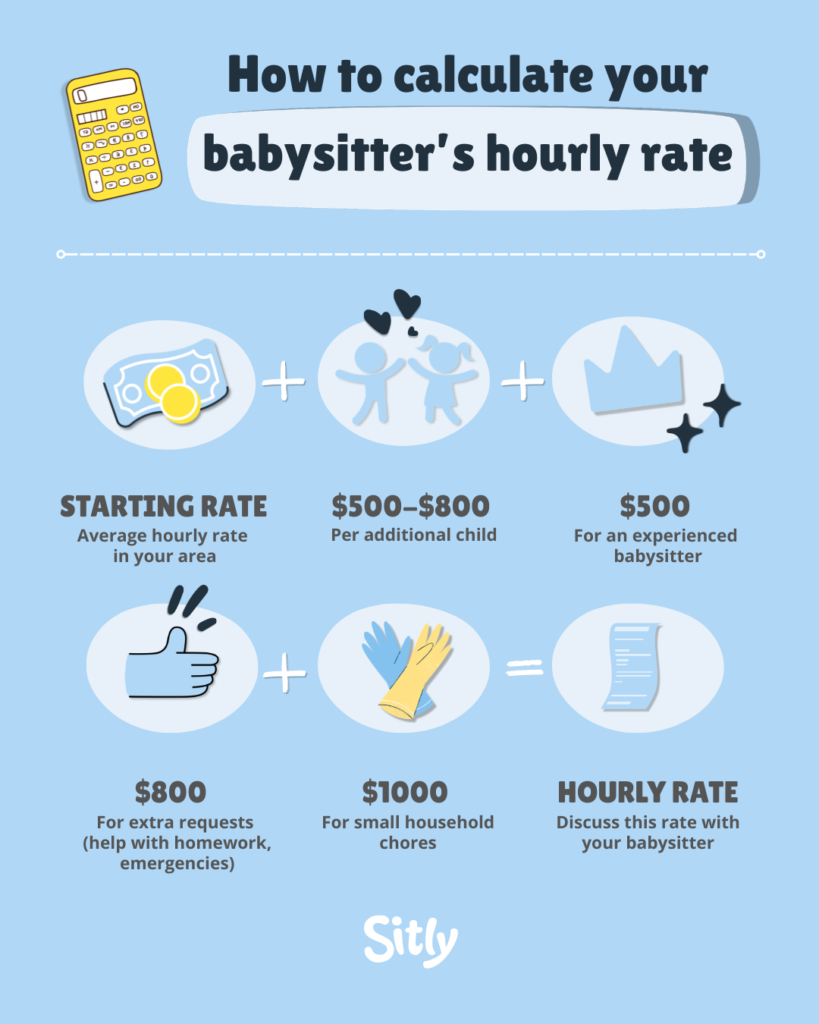
Compensation for Additional Household Tasks
Some basic tasks are a natural part of a nanny’s job: preparing a snack, tidying up toys, or making sure the child’s room is in order. But if the nanny is also expected to help with general household chores, the pay should reflect that extra workload.
Examples of tasks that justify an additional payment:
- Washing and ironing the children’s clothes.
- Cooking for the whole family.
- Cleaning common areas or vacuuming.
- Handling small grocery runs or general household tidiness.
If the tasks go beyond direct childcare, the nanny falls into the “general household staff” category under the domestic workers regime, which may have a different pay scale. In these cases, it’s advisable to agree on a combined rate or an additional bonus on top of the base nanny rate.
Daytime and Nighttime Nanny Rates
Do you need someone just for the evening, or would you prefer a nanny who picks the children up from school and looks after them in the afternoon? Nighttime care is usually paid a bit more, since it involves staying late and adapting to less convenient hours.
Daytime or afternoon care typically includes more tasks, such as:
- Picking the children up from school.
- Taking them to extracurricular activities.
- Preparing an afternoon snack or dinner.
- Supervising playtime.
- Handling bath time and the bedtime routine.
“Last-Minute” or Emergency Nanny Rate
Do you need a nanny at the last moment? That flexibility comes at a price. Urgent calls often force the nanny to rearrange her day or cancel personal plans. In these cases, it’s fair to offer an additional supplement, since immediate availability is a convenience for the family.
So, How Much Should You Pay Your Nanny?
There is no single answer to how much a nanny charges.
The fair amount depends on several factors:
- the nanny’s age, experience, and training,
- the number and age of the children,
- any additional tasks she performs (such as cooking, cleaning, or helping with schoolwork),
- whether she is paid by the hour, by the day, or monthly,
- whether she is a live-out or live-in nanny,
- the city you live in,
- and, of course, your family’s budget.
Ultimately, it comes down to finding a balance between the nanny’s expectations for fair pay and the family’s actual means. And above all, open communication and mutual respect matter most: discussing tasks, schedules, and pay with the nanny from the start is the best way to avoid misunderstandings and build a lasting relationship of trust.
Table of contents


FAQ

The minimum wage is regulated by the Comisión Nacional de Trabajo en Casas Particulares and is updated several times a year.
As of September 2026:
- Live-out nanny: $4,185.94 per hour, $529,261.78 per month
- Live-in nanny: $4,641.90 per hour, $584,936.09 per month
The upcoming increases are already confirmed: +1.7% in October, +1.6% in November, and +1.6% in December 2026.
In addition, registered nannies are entitled to obra social (health coverage), retirement contributions, paid vacation, and aguinaldo (13th-month salary).
A live-out nanny works fixed hours during the day and returns home once her shift ends. Her salary is calculated using the hourly or monthly rate set for Category 5 (personal care).
As of September 2026:
Live-out nanny: $4,185.94 per hour, $529,261.78 per month
A live-in nanny lives in the family’s home and typically has a broader schedule. Her salary is higher because it includes additional hours, constant presence, and, in many cases, support with basic tasks related to childcare.
Live-in nanny: $4,641.90 per hour, $584,936.09 per month.


Trusted sitters, right around the corner
Need a little help? Sitly connects you with experienced babysitters in your area. Whether you need occasional or regular care, finding the right babysitter is super easy. Browse profiles, read reviews, and reach out to your favorites right away.

Related Articles

When is a baby old enough for a babysitter?
Wondering when your baby is old enough for a babysitter? While there’s no single “right” age, short and gradual separations are possible even in the early months when the babysitter is experienced and routines are respected.

10 Ways to Help Your Child Overcome Fear of Monsters at Bedtime
If your child is afraid of monsters at bedtime, you’re not alone. Many kids aged 3 to 6 struggle with nighttime fears fueled by imagination and change. In this article, you’ll learn why these fears happen, how to validate them, and 10 simple, creative ways to help your child feel safe and sleep peacefully. From using nightlights and comforting routines to anti-monster sprays, magic spells, and stuffed animal bodyguards—each idea is designed to reduce anxiety and empower your child at night.

From What Age Can You Safely Leave Your Child Home Alone?
This guide gives parents age-based recommendations, key safety rules, and preparation tips to help children become more independent at the right pace. Learn what your child should know before staying home alone, how to plan for emergencies, and how babysitters can support independence too.

